

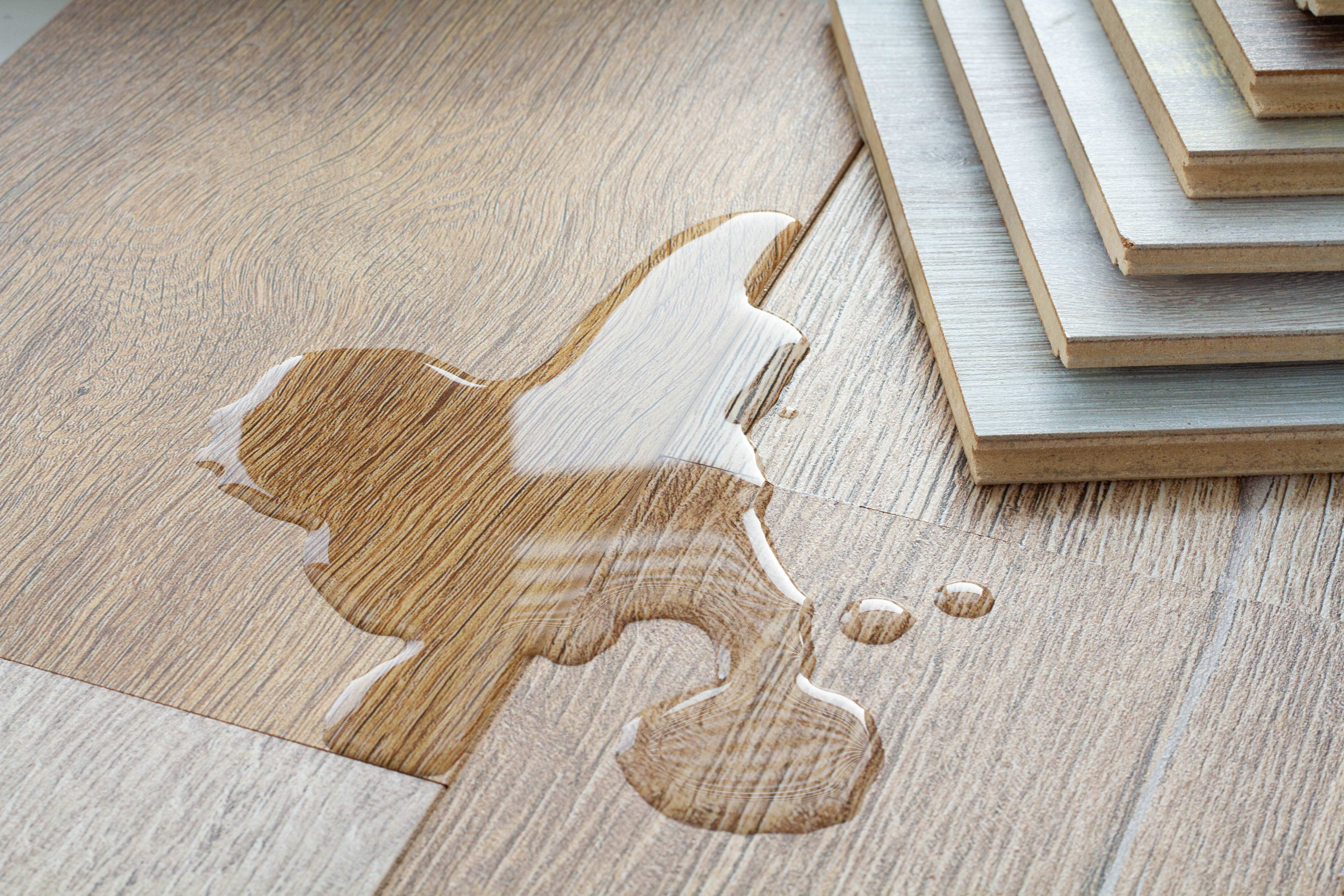
What a Water Stain on Laminate Actually Means
Laminate flooring is built around a wood fiber core with a printed wear layer on top, and that core is the part that reacts to standing water. The discoloration you see on the surface is usually just the first visible sign that moisture has already worked its way into the seam between planks.
That seam is the weak point in almost every laminate floor, since it is the one place where the protective top layer does not fully cover the core. Once water sits at a seam for any length of time, it has a direct path into the material underneath, even if the surface still looks mostly normal.
Why Waiting Even a Few Days Makes a Difference
Laminate core material swells as it absorbs moisture, and that swelling is what causes the lifting, cupping, or bubbling homeowners eventually notice near a stain. The longer water sits, the more of that core gets affected, which is why a stain that seems contained on day one can spread noticeably by the end of the week.
This is also why a quick wipe up after a spill matters so much more with laminate than with tile or sealed hardwood. A spill that gets caught within a few minutes rarely causes lasting damage, while the same spill left overnight near a pet bowl, a plant, or a leaky appliance often does.
How to Tell if the Damage Has Reached the Core
A stain that wipes away completely and leaves the plank flat and even is usually just surface discoloration, and it is worth monitoring rather than replacing right away. The real warning sign is texture, not color. If the plank feels soft, spongy, or slightly raised compared to the boards around it, moisture has already reached the core.
Tapping gently along the affected area can also help. A hollow or different sound compared to unaffected planks nearby often means the swelling has already started beneath the surface, even before it is visible from above. At that point, the affected planks typically need to be replaced rather than treated.
Choosing a Water Resistant Laminate for Moisture Prone Rooms
For rooms where spills are a regular part of life, a water resistant or waterproof core laminate is worth the upgrade over a standard interior product. These cores are built to resist swelling at the seam, which means the exact failure point described above is far less likely to become a problem in the first place.
Kitchens, entryways, and rooms with pets or young kids are the most common places this matters. Our laminate flooring selection includes several water resistant options built specifically for households where spills happen more often than average.
What to Do the Moment You Notice a Stain
Blot the area dry immediately rather than wiping, since wiping can push moisture further into the seam instead of lifting it out. A dry towel with firm pressure held in place for a minute or two does more good than a quick swipe across the surface.
If the stain returns after drying, or if the plank shows any softness or unevenness, it is worth having it looked at before the affected area grows. Catching it early is almost always simpler and less disruptive than waiting until several boards need attention instead of one.
Landmark Flooring has helped homeowners across Tinley Park, IL, Orland Park, IL, Naperville, IL, Oakbrook, IL, and Chicago, IL repair and replace laminate flooring damaged by exactly this kind of moisture exposure. Stop by Tinley Park, IL in Tinley Park to see water resistant laminate options in person, or contact us for a free in home estimate if you are dealing with a stain right now.


