

Why Stair Treads Wear Differently Than an Open Floor
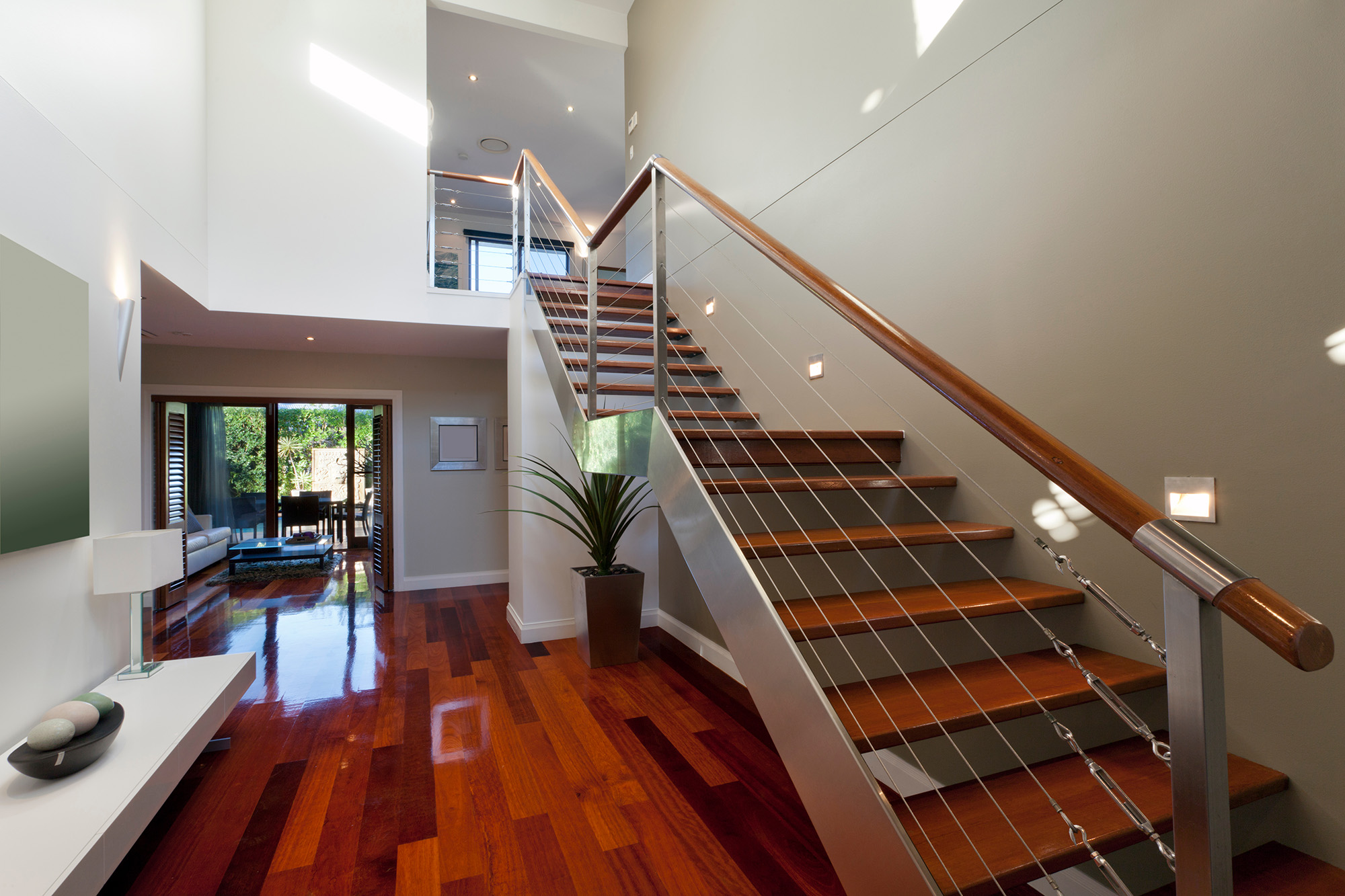
A stair tread absorbs a downward, concentrated impact with every single step, since body weight lands on a narrow strip of wood rather than spreading across an open floor. That repeated point loading wears a finish down faster on stairs than the exact same finish would wear on a living room floor seeing the same number of daily footsteps.
This is why stairs in an otherwise well maintained home are often the first place finish wear becomes visible, usually right in the center of each tread where most people step. It is not a sign of a bad finish, it is simply a different wear pattern that the finish needs to be chosen to handle.
The Nosing Edge Problem Most Homeowners Never Notice Coming
The front edge of a stair tread, called the nosing, takes an entirely different kind of abuse than the flat part of the tread behind it. Shoes catch and scuff that edge constantly, and it is also the part of the stair most likely to chip if something heavy gets dragged down the staircase.
A finish with strong edge durability matters more here than anywhere else on the stairs, and it is worth asking specifically about nosing protection rather than assuming the same finish used on the tread automatically performs the same way on that leading edge.
Why Sheen Choice Changes on Stairs Specifically
A glossy finish that looks beautiful on an open floor can actually work against you on stairs, since gloss reduces surface texture and texture is part of what gives feet traction on a step. This becomes especially relevant in a household with kids, older family members, or anyone navigating stairs in socks.
A satin or matte finish on stairs specifically, even when the main floor uses a higher sheen, is a common and completely reasonable choice. It is not a downgrade, it is a deliberate decision that prioritizes safety on the one part of the house where a slip has real consequences.
Matching Species Without Matching Wear Expectations
Using the same wood species on stairs and the main floor keeps a cohesive look throughout the house, and there is no reason to avoid that for the sake of variety. What changes is the expectation for how each surface wears over time, since the stairs will show finish wear well before the open floor does, even with identical materials.
Knowing this upfront helps set realistic expectations rather than being surprised a few years in when the stairs need attention before the rest of the hardwood does. It is a normal part of how stairs function, not a flaw in the material or installation.
When to Plan for Refinishing Stairs Separately From the Floor
Because stairs wear faster, it is common and often more practical to refinish just the stairs on their own schedule rather than waiting until the whole floor needs attention at once. This keeps the household functional during the work, since a full floor refinish takes the room out of use for days, while stairs alone are a smaller, faster project.
Bringing this up with your specialist at the time of original installation, rather than after wear is already visible, allows the finish and maintenance plan to be built around this reality from day one. Our hardwood flooring selection includes finish options suited specifically to high wear areas like stairs.
Landmark Flooring has finished and refinished stairs throughout Tinley Park, IL, Orland Park, IL, Naperville, IL, Oakbrook, IL, and Chicago, IL with this exact wear pattern in mind. Stop by Tinley Park, IL in Tinley Park to see finish and sheen options for stairs specifically, or contact us for a free in home estimate.


