

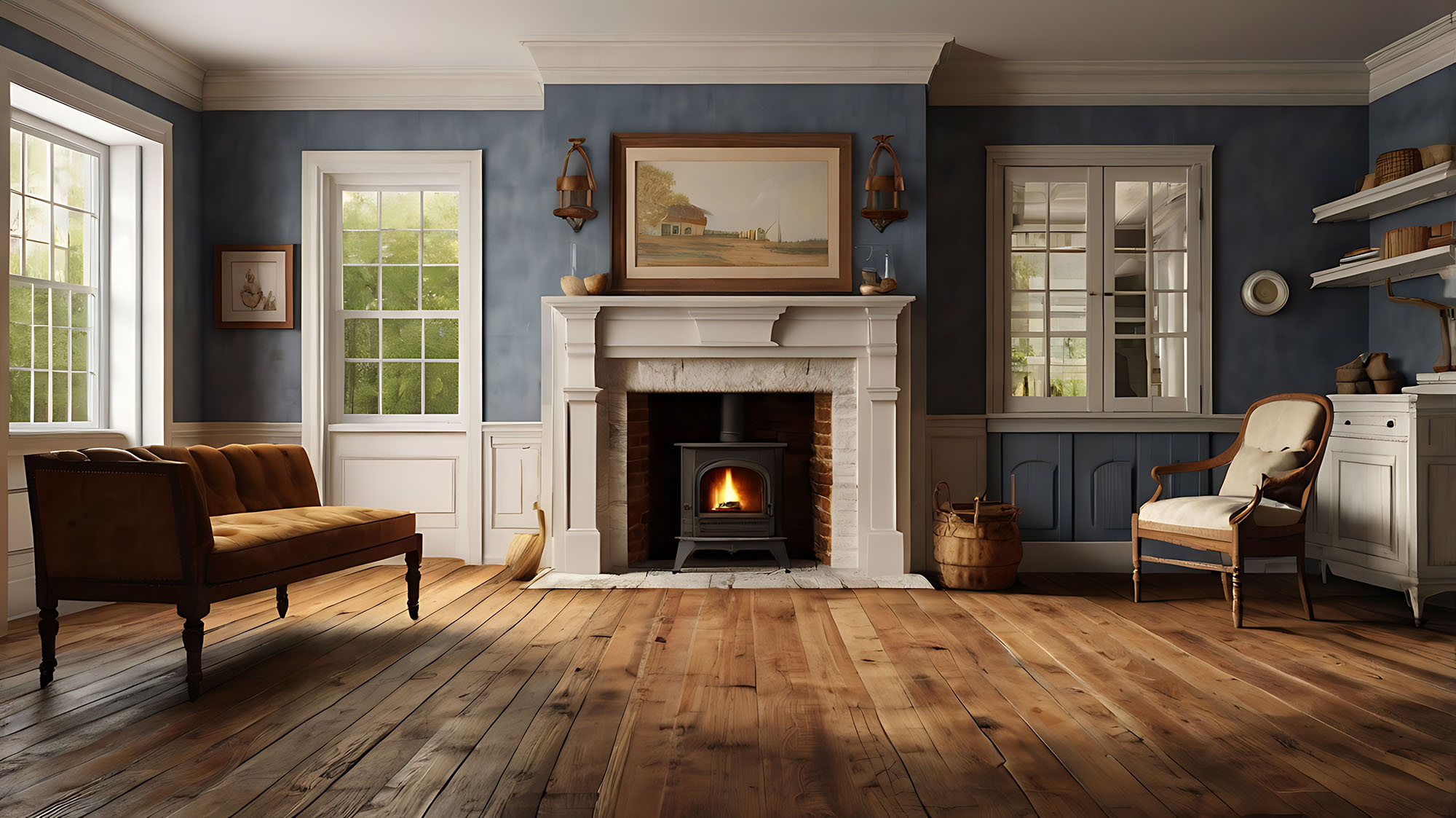
Wide planks are everywhere right now — 7, 8, even 9 inches across and they make a room feel bigger and more current. Then they get installed over an original bungalow subfloor and start telegraphing gaps, squeaks, or cupping within a season, and the homeowner wonders what went wrong.
At Landmark Flooring, we install wide-plank constantly and love the look. We're also upfront about the physics, because the width that makes these floors beautiful is exactly what makes them less forgiving.
Wider Boards Move More
Wood expands and contracts across its width, not its length. A 7-inch plank simply has more than twice the width of a 3-inch strip, so every percent of seasonal moisture change produces more than twice the visible movement at each seam. The same humidity swing that barely registers on narrow strip can open a noticeable gap on a wide board.
This is why Chicago's climate punishes width specifically. Our dry winters and humid summers drive bigger seasonal shifts than milder regions, and wide solid planks amplify that shift right where you can see it. The wood isn't defective, there's just more of it reacting at once.
The Bungalow Subfloor Problem
Most Chicago bungalows were built between the 1910s and 1940s, and many still ride on the original diagonal pine subfloor over joists. After a century of settling, that surface is rarely dead flat, and wide planks are far less tolerant of dips and humps than narrow boards that can flex over small variations.
Lay a long, stiff 8-inch plank across an uneven subfloor and the high spots become rocking points and squeaks, while low spots leave the board unsupported and prone to flex. The wider and longer the plank, the more the subfloor underneath has to be corrected first.
How to Get the Wide Look Safely
The fix is rarely "give up the wide plank." It's choosing the right construction and doing the prep. A few moves make all the difference:
Choose engineered wide-plank over solid — its cross-layered core moves far less with humidity
Flatten the subfloor with sanding, leveling compound, or an added plywood layer before install
Add a proper plywood underlayment in older homes for a flat, stable, squeak-free base
Acclimate the flooring on site for several days so it matches your home's conditions
Hold indoor humidity at 35–55% year-round to limit seasonal movement
Match the Floor to the House
A vintage bungalow rewards a thoughtful spec. Engineered wide-plank gives you the expansive, modern look while standing up to our humidity far better than solid wood of the same width and it can go over more subfloor types, including spaces where solid wood would struggle.
The right answer depends on your exact subfloor, room, and how much movement you can live with. That's a five-minute conversation that saves a lot of regret, and we're glad to have it before you commit to a product.
Wide-plank floors are absolutely doable in an older Chicago home, they just need the right product and honest prep. Landmark Flooring has helped homeowners across Tinley Park, IL, Orland Park, IL, Naperville, IL, Oakbrook, IL, and Chicago, IL get the look right since 1991, and we stand behind every installation.
Explore wide-plank hardwood and engineered options at Tinley Park, IL, and let our team assess what your bungalow's subfloor really needs. Contact us today to schedule a visit or an in-home consultation.


