

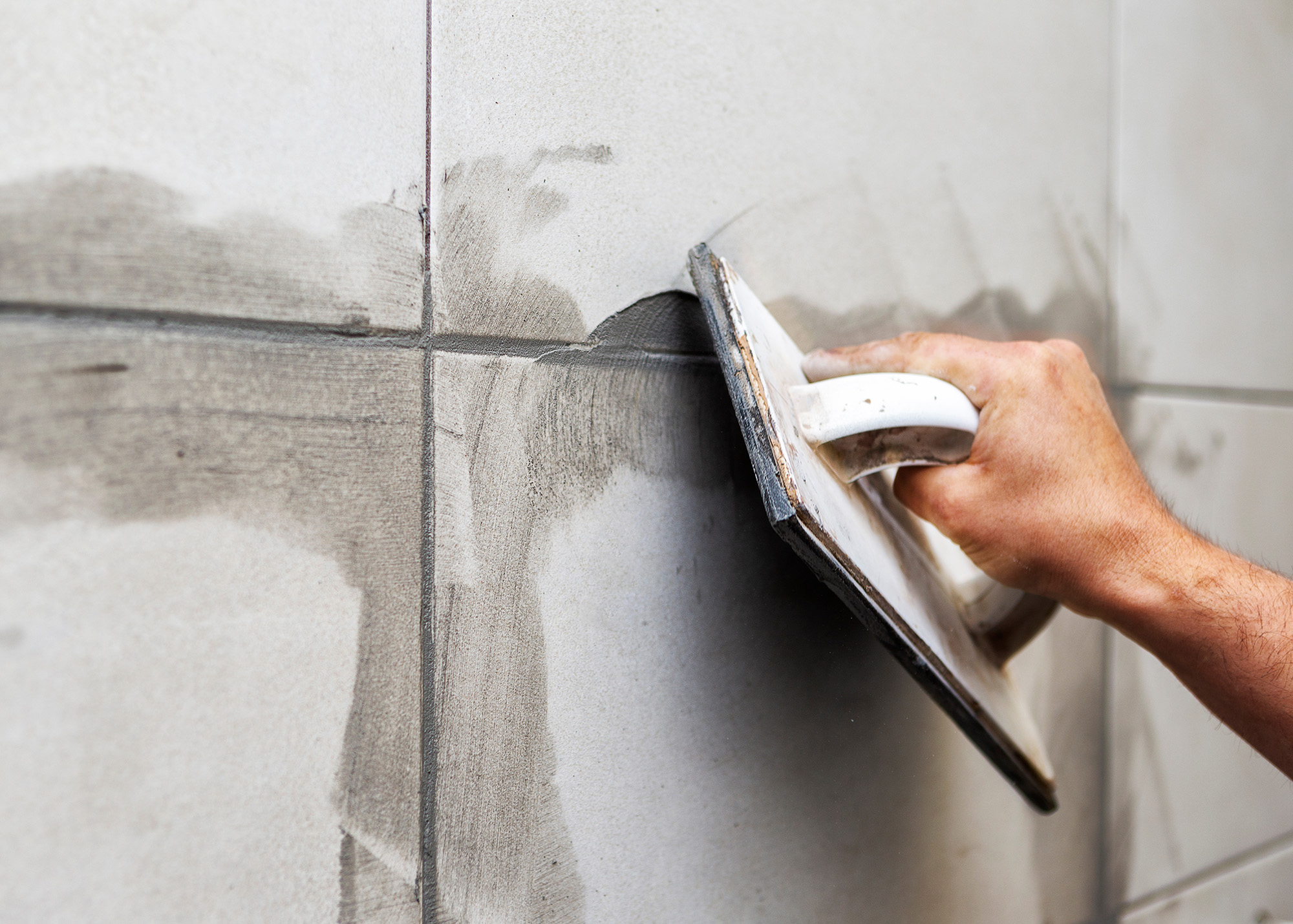
Why Entryway Grout Fails First
An entryway grout line sees more foot traffic, grit, and moisture than grout almost anywhere else in the house. Every trip through the door grinds a small amount of sand and salt into the surface, and that abrasion wears down the grout well before it touches the tile itself.
South suburban homes see an extra layer of stress here because of the winter salt and slush tracked in from driveways and sidewalks for months at a time. That combination of moisture and grit is exactly what breaks grout down fastest, which is why entryways are almost always the first place regrouting becomes necessary.
The Signs That Mean Cleaning Will Not Fix It
Discoloration that will not lift with a grout cleaner usually means the grout has become porous enough to hold stains permanently, not just on the surface. At that point, no amount of scrubbing brings the color back, because the staining has worked into the material itself.
Cracking, crumbling, or grout that has visibly pulled away from the tile edge is a different problem entirely. Once you see gaps at the tile edge, water is getting underneath the surface and can reach the subfloor or thinset below it. That is the point where regrouting stops being cosmetic and becomes a matter of protecting the floor underneath.
What Happens if You Wait Too Long
Grout is the seal that keeps water away from the subfloor, so once it fails, moisture has a direct path underneath the tile. In an entryway that already deals with melting snow and slush all winter, that path gets used constantly.
Left unaddressed, this can lead to loose tiles, subfloor damage, or mold growth beneath the surface, none of which are visible until the problem has already progressed. Catching it at the grout stage is far less invasive and far less expensive than dealing with tile that needs to be pulled up and reset.
Sanded Versus Unsanded and Why It Matters Here
Entryways with wider grout joints need sanded grout, since the added texture gives it the strength to handle heavy foot traffic without crumbling. Unsanded grout works fine in tighter joints on walls or backsplashes, but it is not built for the kind of pressure an entryway sees every day.
A sealed, sanded grout with a joint width matched to the tile size is the combination that holds up longest in this specific spot. If your entryway currently has unsanded grout or an unsealed finish, that is often the real reason it failed as fast as it did the first time. Our tile flooring selection includes grout and sealing options built specifically for high traffic entry points.
How Often to Plan for This in a Busy Household
A typical entryway grout job holds up for several years with regular sealing, but a household with kids, multiple pets, or heavy winter traffic will usually see wear sooner. Resealing on a yearly basis extends the life significantly and is far cheaper than a full regrout.
If you are already noticing staining or minor cracking, it is worth having it looked at before another Chicago winter runs its course. Catching it in the fall means the entryway is protected before the salt and slush season starts again.
Landmark Flooring has repaired and replaced entryway tile and grout throughout Tinley Park, IL, Orland Park, IL, Naperville, IL, Oakbrook, IL, and Chicago, IL for homeowners dealing with exactly this kind of wear. Stop by Tinley Park, IL in Tinley Park to talk through your options, or contact us for a free in home estimate before winter traffic starts again.


